Weatherboard homes are a big part of Newcastle’s character, with their timber cladding, and charming verandahs. They carry a sense of history that’s hard to replicate – but living in one doesn’t mean you have to compromise on some of our modern comforts.
The challenge many homeowners face is finding that sweet spot where contemporary updates enhance daily life without erasing the character that makes these homes special. Get it right, and you’ll have a home that feels both timeless and perfectly suited to how families live today.
We love helping families update and extend their weatherboard homes, and this is our guide to adding today’s comforts while keeping all the features that make your home unique.
Understanding What Makes Your Home Unique
Before calling a builder, take time to identify what’s worth keeping. Walk around your home and note the features that give it personality. Original timber floors, decorative fretwork, high ceilings with ornate cornices and that welcoming front verandah are all elements that contribute to your home’s distinct character.
These aren’t just aesthetic touches. They’re part of what makes weatherboard homes feel spacious and airy despite often having a modest footprint. Understanding this helps you make smarter decisions about what to update and what to preserve.
Creating Space Without Losing Charm
Families today often want open-plan living, but weatherboard homes were designed with separate rooms for specific purposes. The key is to open up spaces thoughtfully rather than knocking down every wall. We recommend keeping the front rooms intact to preserve the home’s street appeal, while opening up the rear – kitchen, dining, and family areas – where most of your daily living happens. Instead of completely knocking down walls we’ve created partial openings and wide doorways to help improve a home’s flow and light without losing it’s character.
When it comes to extensions, the same principle applies. Step new additions back from the main facade, locating them to the side or rear, so the original home remains the focus. Use materials that complement rather than mimic the original, and match roof pitches, eaves, and verandah lines to make the addition feel like a natural evolution of the house.
Windows That Work (and Look Great)
Original timber windows are often single-glazed, draughty, and lacking in modern security features. But their proportions and divided panes are crucial to maintaining your home’s character.
We recommend keeping the look, and upgrading the performance. Depending on your budget you secondary glazing installed behind existing frames provides insulation while preserving the original windows completely. Or if you would like to make a bigger investment double-glazed timber windows can be manufactured to match your original style.
Resist the temptation to install new large windows in walls that originally had smaller, traditionally proportioned openings. It rarely looks right and can actually make rooms feel less balanced. If you want more light, consider adding windows in new extension areas while keeping original elevations intact.
Floors with Character
If you’re lucky enough to have original timber floorboards, they’re worth the effort to restore. These boards, often made from old-growth timber, have a quality and character that’s impossible to replicate affordably today.
Sanding and refinishing brings them back to life and the natural variation in grain and colour adds warmth that engineered products can’t quite match.
Of course, there may be areas where the original floors are beyond repair but we can help you choose the best replacements. Ideally, we like to use alternative materials in select areas and incorporate transitions thoughtfully at doorways rather than mid-room.
Modern Kitchens & Bathrooms
These are the rooms where contemporary function matters most, and fortunately, they’re also spaces where mixing old and new works beautifully.
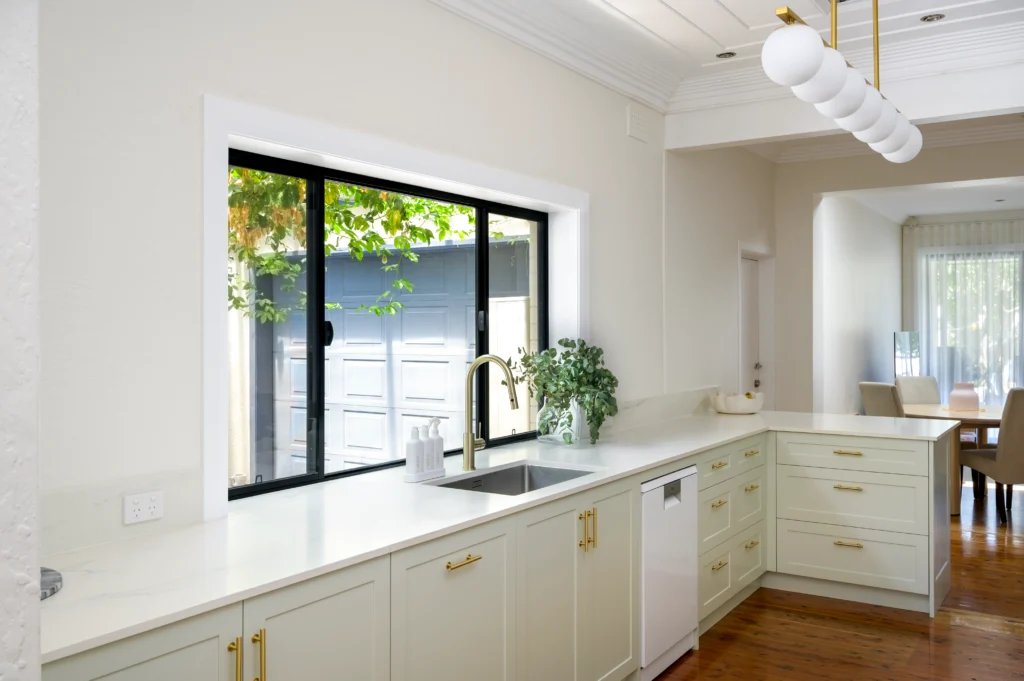
In the kitchen, modern appliances and storage are non-negotiable for most families. But you can nod to the home’s heritage through choices like traditional-style cabinetry with shaker doors, vintage-inspired tap fittings, subway tiles, and open shelving that looks like old larder cabinets. A contemporary kitchen doesn’t need to look slick and minimal. It can have warmth and character that suits a weatherboard home.
Bathrooms also work well when you mix old and new. Choose modern fixtures that feel classic rather than super sleek or ultra-modern. Think patterned tiles, marble tops, clawfoot tubs, and vintage-style taps – they give you modern convenience while keeping a timeless look.
Upgrading Comfort with Insulation
Weatherboard homes weren’t built with energy efficiency in mind, and Newcastle’s climate – with hot summers and cold winters – can make staying comfortable a real challenge. This is where insulation can make a big difference.
Ceiling insulation is usually the easiest place to start and gives the best bang for your buck. If you can access the subfloor, underfloor insulation is another great way to keep the home cosy. Wall insulation can be trickier in existing weatherboards, but it’s still possible – either with blown-in insulation or when updating interior walls. Done right, these upgrades are completely invisible, but they make your home feel warmer in winter, cooler in summer, and just generally more enjoyable to live in.
Working with the Right Team
Renovating a weatherboard home successfully requires collaboration between a local Newcastle architect and builder who understand heritage properties. An architect can help translate your vision into detailed plans that respect the home’s character, while a builder experienced with weatherboards knows how to execute those plans and navigate any surprises that come with older homes.
The goal isn’t to turn your weatherboard home into a museum or make it look brand new. A few thoughtful touches with a traditional feel are all it takes to keep everything looking cohesive while staying true to your home’s character.
At Verge Construction Co, we renovate weatherboard homes all the time, so we know how to strike the right balance between keeping what’s special and adding modern comforts. We can help you figure out which walls to open, which details to preserve, and where upgrades will enhance rather than take away from your home’s charm.
These homes have lasted for a reason, and we love respecting that legacy while making it work for today – so you end up with a home that feels warm, functional, and full of soul (something increasingly rare in today’s cookie-cutter suburbs).